To clean around a dental implant, brush twice a day with a soft toothbrush, angled towards the gumline. Then, clean between and under the implant once a day with an interdental brush or implant floss. Finally, see your dentist or hygienist for a professional implant clean every 3 to 6 months.
A dental implant can last for many years. However, it still needs daily care. Plaque can build up around an implant, just like a natural tooth. This guide shows you how to clean around your implant, step by step. As a result, you can keep your gums healthy and your implant strong.
What Does Cleaning Around a Dental Implant Mean?
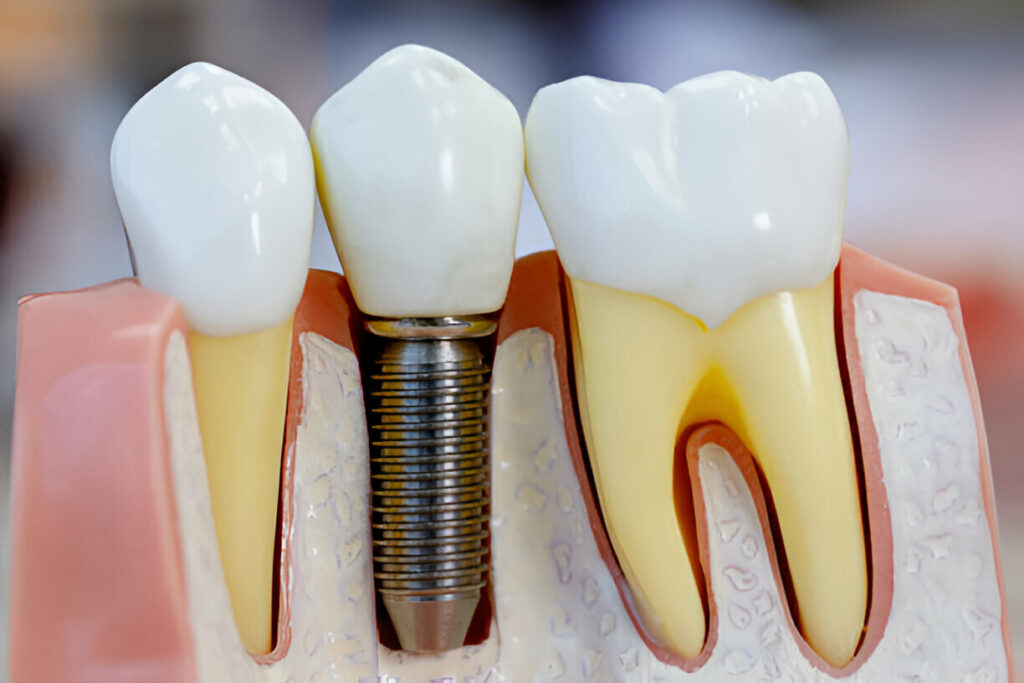
Cleaning around a dental implant means removing plaque from the crown, the gumline and the gaps beside the implant. A dental implant has three parts: a titanium post in the jawbone, a small connector called an abutment, and a crown on top. So, you need to clean all the places where these parts meet your gum.
Why Do Implants Need Special Cleaning?
An implant cannot get tooth decay. However, the gum and bone around it can still get sick. Natural teeth have a soft cushion that helps fight germs. Implants do not have this cushion. Therefore, germs can harm the area around an implant more quickly.
Plaque that stays on the implant can cause two main problems:
- Peri-implant mucositis: This is swollen, sore or bleeding gum around the implant. The good news is that you can usually reverse it with better cleaning and a professional clean.
- Peri-implantitis: This is more serious. The infection spreads and the bone around the implant starts to shrink. Without treatment, the implant can become loose.
In short, good daily cleaning is the best way to protect your implant.
Which Tools Should You Use?
The right tools make cleaning easier and safer. Here is a simple guide:
| Tool | What it does | Tip |
| Soft toothbrush (manual or electric) | Cleans the crown and gumline | Avoid hard bristles, as they can hurt your gums |
| Interdental brush | Cleans the gaps beside the implant | Choose plastic-coated wire, and ask your hygienist for the right size |
| Implant or super floss | Cleans around and under the crown | It has a stiff end, so you can thread it under bridges |
| Single-tuft brush | Reaches tight spots and the back of the implant | Great for the gumline behind back teeth |
| Water flosser | Flushes out food under bridges and fixed teeth | Use it as an extra, not instead of brushes |
| Low-abrasion fluoride toothpaste | Protects your natural teeth | Avoid gritty whitening pastes, as they can scratch the crown |
Step-by-Step: How to Clean Around a Dental Implant
Follow these steps every day. At first, they may feel slow. Soon, however, they will feel normal.
Step 1: Brush Twice a Day
Brush for two minutes in the morning and last thing at night. Tilt your soft brush towards the gumline. Then, use small, gentle circles around the implant crown. Also, spit out the toothpaste afterwards, but do not rinse straight away.
Step 2: Clean Between the Teeth Once a Day
Next, slide an interdental brush gently into the gap beside your implant. Move it in and out a few times. Then, do the same on the other side. If it feels tight, try a smaller size. Never force the brush.
Step 3: Floss Around the Implant
Thread a piece of implant floss around the crown. Then, cross the ends to make a loop around the implant. Slide it gently from side to side, just under the gumline. This removes plaque that a brush can miss.
Step 4: Use a Single-Tuft Brush for Hard-to-Reach Spots
Now, use a single-tuft brush for the back of the implant and any tight corners. Hold it at the gumline and make small circles. This step helps a lot with back teeth.
Step 5: Add a Water Flosser if You Need It
A water flosser helps if you have a bridge or a full set of fixed teeth. Start on a low setting. Then, aim the water along the gumline and under the bridge. However, keep using your brushes as well.
Step 6: Use Mouthwash Only if Your Dentist Advises It
Most people do not need mouthwash every day. Sometimes, however, your dentist may suggest a short course for sore gums. If so, use it at a different time from brushing, so it does not wash away the fluoride.
Step 7: Check Your Gums Each Week
Finally, look at your implant in a mirror once a week. Check for redness, swelling or bleeding. If you spot a change, book a visit early.
How to Clean Different Types of Implants
Each type of implant needs slightly different care. So, use the guide below for your type:
- Single implant: Brush, then clean both sides with an interdental brush or implant floss.
- Implant bridge: Thread super floss under the false tooth in the middle. Also, use a water flosser to flush out food.
- Full-arch fixed teeth (such as All-on-4): Use a single-tuft brush, super floss and a water flosser every day. Your dentist may also remove the teeth for a deep clean at check-ups.
- Removable overdenture: Take it out every night. Then, brush the denture over a bowl of water. Next, gently brush the small studs on your gums with a soft or single-tuft brush.
How Do You Clean a New Implant After Surgery?
Your mouth needs time to heal after implant surgery. So, always follow the aftercare plan your dentist gives you. In the first few days, keep brushing your other teeth, but stay gentle near the wound. Also, avoid smoking and alcohol while you heal. Then, once your dentist confirms that the area has healed, start your full daily routine.
Why Do Professional Implant Cleans Matter?
Even with great home care, some plaque can harden over time. That is why professional cleans matter. Most people need a check-up and a hygienist clean every 3 to 6 months. Your dentist will set the right gap for you.
During a visit, your dentist or hygienist will:
- Check your gums for bleeding and measure the space around the implant.
- Remove hard build-up with tools that will not scratch the implant.
- Take an X-ray when needed to check the bone level.
- Check your bite, especially if you grind your teeth.
- Show you the right brush sizes for your mouth.
Warning Signs to Look Out For
Spot problems early, and you can often fix them simply. So, contact your dentist if you notice any of these signs:
- Gums that bleed when you brush or floss.
- Red, puffy or sore gums around the implant.
- Bad breath or a bad taste that will not go away.
- Pus or fluid around the implant.
- Gums that start to pull back from the crown.
- An implant or crown that feels loose.
If you have pain, swelling or a loose implant, call your dentist straight away.
What Can Raise the Risk of Implant Problems?
Some habits and health conditions make implant problems more likely. For example:
- Smoking: It slows healing and raises the risk of infection.
- Past gum disease: You may need more frequent cleans.
- Diabetes: Poorly controlled blood sugar can slow healing.
- Teeth grinding: It puts extra force on the implant. A night guard can help.
- Missed check-ups: Small problems can grow without anyone noticing.
Key Benefits of Cleaning Around Your Implant
- Your gums stay healthy and free from bleeding.
- You protect the bone that holds your implant in place.
- Your implant can last for many years.
- You avoid costly treatment later on.
- Your breath stays fresh and your smile stays bright.
FAQs
How often should I clean around my dental implant?
Brush twice a day and clean between your teeth once a day. Also, see your dentist or hygienist every 3 to 6 months.
Can I use normal floss around an implant?
You can, but it may shred or miss spots. Instead, implant floss or super floss works better around the crown.
Is a water flosser good for dental implants?
Yes. A water flosser helps flush out food, especially under bridges. However, it works best alongside brushing and interdental brushes.
Can an electric toothbrush damage my implant?
No. An electric toothbrush with a soft head is safe for implants. Just let the brush do the work and do not press hard.
Which toothpaste is best for dental implants?
Use a low-abrasion fluoride toothpaste. Also, avoid gritty whitening pastes, because they can scratch the crown.
Is it normal for my gums to bleed around an implant?
No. Bleeding is often an early sign of gum inflammation. So, improve your cleaning and book a check-up.
Can a dental implant get gum disease?
Yes. The gum and bone around an implant can become infected. This condition is called peri-implantitis, and a dentist needs to treat it.
Book Your Implant Check-Up at Alverna House Dental Practice
Good daily cleaning keeps your implant healthy. However, regular professional care matters too. At Alverna House Dental Practice in St Helens, our team checks your implant, cleans the areas you cannot reach and shows you the right tools for your mouth. As a result, you can feel confident that your implant is in good shape. So, if your gums bleed, or you are due a check-up, book your appointment with Alverna House Dental Practice today. You can find us at 45 Blackbrook Road, St Helens, WA11 9QA.
Also read : Does Composite Bonding Damage Your Teeth?