
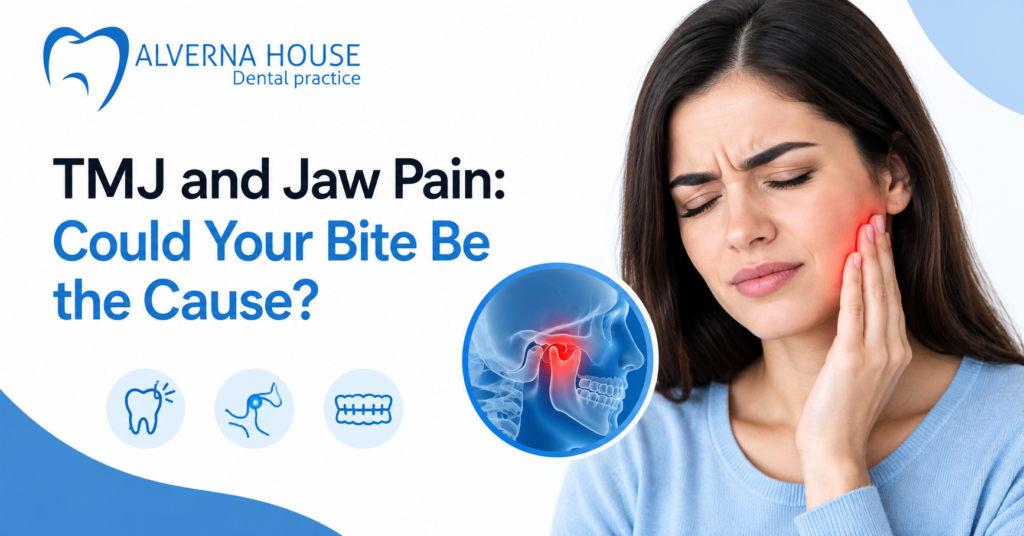
Your bite can play a part in TMJ and jaw pain, but it is rarely the only cause. Clenching, grinding, stress, poor sleep and injury often matter more. A sudden change in your bite, such as a new filling that feels too high, is one of the clearest bite-related causes and is usually easy to fix.
Jaw pain is common, and it can feel worrying. Many people wonder if their bite is to blame. The honest answer is “sometimes, but not usually on its own”. This guide explains how your bite and your jaw joint work together. It also shows what to try first and when to see a dentist.
What Is TMJ and Jaw Pain?
The temporomandibular joint (TMJ) connects your lower jaw to your skull, just in front of each ear. Problems with this joint or the muscles around it are called temporomandibular disorders (TMD). Most people simply call it “TMJ” or jaw joint pain.
How Your Jaw Joint Works
Your jaw joint is not a simple hinge. Instead, it both hinges and slides forward when you open wide. A small disc of cartilage sits inside the joint and cushions each movement. Meanwhile, strong chewing muscles on each side of your face power the joint.
Your bite, also called your occlusion, is how your top and bottom teeth meet. When you close your mouth, your teeth guide your jaw into place. So your bite, your muscles and your joint all work as one team.
Common Signs of TMJ Problems
- Pain in front of the ear, in the jaw or in the cheek muscles.
- Clicking, popping or grating sounds when you open or chew.
- A stiff jaw, or a jaw that locks or will not open fully.
- Headaches, often around the temples.
- Earache or a feeling of fullness in the ear.
- Aching teeth or worn teeth from clenching or grinding.
- Pain that feels worse in the morning or after chewing.
However, clicking on its own is very common. If your jaw clicks without pain or locking, it often needs no treatment. Still, mention it at your next dental check-up.
Could Your Bite Be the Cause?
Your bite can contribute to jaw pain in some people. However, research suggests the bite is usually a smaller factor than most people expect. Many people have an uneven bite and no jaw pain at all. Likewise, many people with jaw pain have a normal bite.
When Your Bite Is More Likely to Be Involved
- A new filling or crown feels high, and your jaw ache started soon after.
- Your teeth no longer seem to meet the way they used to.
- Your jaw shifts to one side to find a comfortable bite.
- You have missing back teeth, so you chew mostly on one side.
- You have a crossbite, a deep bite or an open bite.
- Your teeth show heavy or uneven wear.
The first point matters most. A filling or crown that sits even slightly too high can make your jaw muscles work harder. Fortunately, your dentist can usually adjust it quickly and simply.
Other Common Causes of Jaw Pain
In most cases, several things add together. For example:
- Clenching or grinding your teeth, often during sleep (bruxism).
- Stress, anxiety or poor sleep, which increase muscle tension.
- Habits such as chewing gum, biting nails or chewing pens.
- A knock to the jaw or face.
- Arthritis in the jaw joint.
- Posture that pushes your head forward, such as long hours at a laptop.
When the Joint Changes the Bite
Sometimes the link runs the other way. A jaw joint problem, such as arthritis, can change how your teeth meet. So if your bite changes suddenly and you have not had recent dental work, see your dentist. They can check the joint, not just the teeth.
Signs You Need Urgent Help
Most jaw pain is not dangerous. However, some signs need urgent attention:
- Jaw pain with chest pain, arm pain or breathlessness. Call 999, as this can signal a heart attack.
- Swelling of the face or jaw with a fever or difficulty swallowing. Seek urgent care the same day.
- A jaw that locks open or shut and will not move.
- New numbness in the face or lip.
- Aged over 50, with new jaw pain when chewing, headaches, scalp tenderness or sight changes. Contact your GP or NHS 111 the same day.
What to Do About Jaw Pain: Step by Step
- Rest your jaw. Eat soft foods for a few days. Also, cut food into small pieces and avoid chewing gum.
- Ease the pain. Use a warm flannel or a wrapped cold pack on the sore area. Then ask a pharmacist about suitable pain relief.
- Notice daytime clenching. Keep your lips together, your teeth slightly apart and your tongue resting on the roof of your mouth.
- Look at stress and sleep. Try relaxation, gentle exercise and a regular bedtime. These steps often reduce clenching.
- Book a dental check. See your dentist if pain lasts more than a couple of weeks, or sooner if it started after dental work.
- Get a full assessment. Your dentist will check your joint, muscles, bite and teeth. They may also take X-rays if needed.
- Start with reversible care. Your dentist may suggest a custom night guard or splint, jaw exercises or physiotherapy.
- Discuss specialist care if needed. If pain continues, your dentist or GP can refer you to a hospital oral and maxillofacial team.
What Happens at a Jaw Pain Assessment?
First, your dentist asks about your symptoms, habits, sleep and recent dental work. Next, they gently feel your jaw muscles and joints. Then they watch how your jaw opens, closes and moves side to side. They also check how your teeth meet and look for signs of wear. Finally, they explain what they find and agree a plan with you.
Treatment Options for Bite-Related Jaw Pain
Good care starts gently. For this reason, most dentists begin with simple, reversible treatment before anything permanent.
- Bite adjustment: smoothing a high new filling or crown so your teeth meet evenly.
- Night guard or splint: a custom appliance that protects teeth and relaxes jaw muscles during sleep.
- Jaw exercises and physiotherapy: gentle movements that improve comfort and range.
- Replacing missing teeth: bridges, dentures or implants can help you chew on both sides.
- Orthodontic treatment: braces or aligners can correct a bite problem, but they are not a guaranteed cure for jaw pain.
Also, be cautious of anyone who offers to grind down healthy teeth as a first step. Permanent bite changes rarely make sense before gentler options have been tried.
Key Points to Remember
- Your bite can play a part in jaw pain, but it rarely acts alone.
- A new high filling or crown is a common and fixable cause.
- Clenching, grinding and stress often matter more than bite.
- Most jaw pain improves with simple self-care.
- Reversible treatment should come before permanent changes.
- Some symptoms need urgent medical help.
Frequently Asked Questions
Can a bad bite cause TMJ problems?
A bad bite can contribute in some people. However, it is rarely the only cause, and clenching, stress and injury often play a bigger role.
Can a new filling cause jaw pain?
Yes. If a new filling or crown sits too high, your jaw can ache. Your dentist can usually adjust it in a short visit.
Will braces fix my TMJ pain?
Not always. Braces can correct a bite problem, but they do not reliably cure jaw pain on their own.
Does TMJ go away on its own?
Many cases settle within weeks or months with self-care. So rest your jaw, manage stress and see a dentist if it lasts.
Should I see a dentist or a GP for jaw pain?
Start with your dentist for jaw pain, clicking or bite changes. However, see your GP if you also have other health symptoms.
Is jaw clicking a problem?
Clicking without pain is common and often harmless. Therefore, you only need to act if it becomes painful or your jaw locks.
Can I get TMJ treatment on the NHS?
Yes, NHS dentists can assess jaw pain and bite problems. They can also refer you to a hospital specialist if needed.
Final Thoughts
Jaw pain can feel frustrating, but it usually improves. Your bite may play a part, especially after new dental work. Still, clenching, stress and daily habits often matter more. So start with simple self-care, then book a dental check if the pain lasts. Finally, choose gentle, reversible care before any permanent changes.
Book a Jaw Pain Assessment at Alverna House Dental Practice
If jaw pain, clicking or headaches are affecting your day, our team at Alverna House Dental Practice in St Helens can help. We check your jaw joint, muscles, teeth and bite in one calm, unhurried visit. Then we explain what we find in plain words and talk you through your NHS and private options. Book your assessment with Alverna House Dental Practice today, and take the first step towards a more comfortable jaw.
Also read :https://alvernahouse.co.uk/smoking-and-oral-health/