Your child should visit the dentist when their first milk teeth appear or before their first birthday. In the UK, this early visit helps your child become familiar with the dental setting. It also gives the dentist a chance to spot early oral health problems and give you useful advice about brushing, food and tooth decay.
You do not need to wait until your child has a full set of teeth. In fact, starting early can help make dental visits feel normal. It also gives you a chance to ask questions about your child’s growing smile.
So, if you have been wondering “when to take toddler to dentist UK?”, the simple answer is: book the first visit when the first milk tooth appears, or by age one at the latest.
Why Is an Early Dental Visit Important?
Baby teeth may not stay forever, but they still matter. They help children eat, speak, and smile. They also hold space for adult teeth that come later.
However, baby teeth can develop decay. Young children may also have habits that affect their teeth, such as frequent sugary drinks, dummy use or thumb sucking.
An early dental visit gives parents a chance to learn how to protect those first teeth. The dentist can also look for early signs of tooth decay or other oral health concerns.
Most importantly, the first visit does not need to be about treatment. It can simply be about checking the mouth, giving advice and helping your child feel comfortable around the dental team.
What Is the “Dental Check by One” Approach?
You may have heard the phrase “Dental Check by One”. It refers to the idea that children should have an early dental check by their first birthday.
NHS England supports early dental attendance for children aged 0 to 2. Its Starting Well approach aims to improve early dental access and preventive care. It also supports awareness of the Dental Check by One campaign.
Therefore, you do not need to wait for a dental problem.
A first visit can help you understand:
- How to clean your child’s teeth.
- Which toothpaste to use.
- How often to brush.
- Which foods and drinks can increase the risk of decay.
- What to expect as more teeth appear.
- When your child should return for another check-up.
This early advice can make daily dental care much easier.
What Happens During a Child’s First Dental Visit?
Many parents worry that their baby or toddler will not sit still. That is completely understandable.
Young children may not understand what a dentist does. They may also feel unsure in a new room.
However, the first visit can stay simple.
Depending on your child’s age and cooperation, the dentist may:
- Look at the teeth and gums.
- Check the mouth and developing teeth.
- Look for signs of tooth decay.
- Ask about brushing.
- Ask about your child’s diet and drinks.
- Talk about teething.
- Discuss dummy or thumb-sucking habits.
- Give advice about fluoride toothpaste.
- Explain when the next check-up should take place.
A very young child may only manage a quick look. That still makes the visit useful.
In addition, the dental team can help your child become familiar with the sights and sounds of a dental practice. NHS guidance specifically notes that early visits help children get used to the dental environment and dentist.
Does My Child Need Teeth Before Seeing a Dentist?
No. Your child does not need a full set of teeth before their first dental visit.
The NHS recommends taking your child when their first milk teeth appear or before they reach 12 months old.
The first tooth often appears at around six months, although every child develops at a different pace.
So, do not worry if your baby’s teeth arrive earlier or later than another child’s.
The important thing is to start looking after the teeth as soon as they appear and arrange an early dental visit.
How Can You Prepare Your Child for Their First Dentist Visit?
A little preparation can make the appointment easier.
First, keep your language simple and positive. You can say:
“The dentist will count your teeth and have a look at your smile.”
You do not need to give your child too much information.
Also, avoid using words that may create fear. For example, there is no need to talk about pain, injections or drills before the appointment unless your dental team asks you to.
Instead, make the visit sound normal.
You can also:
- Read a simple children’s book about visiting the dentist.
- Let your child watch you brush your teeth.
- Talk about the dentist in a positive way.
- Bring a familiar toy if it helps your child feel calm.
- Choose an appointment time when your child is usually rested.
- Tell the dental team if your child feels nervous.
Most importantly, stay relaxed yourself. Children can notice when adults feel worried.
What If Your Toddler Is Scared of the Dentist?
It is normal for a toddler to feel unsure during a first dental visit.
Your child may cry. They may refuse to open their mouth. They may want to sit on your lap.
That does not mean the visit has failed.
The dental team can often work slowly and give your child time to become comfortable. A first appointment may simply involve talking to you and letting your child explore the surroundings.
Furthermore, regular early visits can help make the dentist a familiar part of your child’s routine. NHS guidance encourages parents to keep dental visits positive and fun.
If your child feels nervous, tell the practice before the appointment. This allows the team to plan a calmer experience.
How Should You Look After Your Child’s First Teeth?
Dental care starts as soon as the first milk tooth appears.
For children under three, NHS guidance recommends brushing twice a day. Use a children’s fluoride toothpaste containing at least 1,000 parts per million (ppm) fluoride, unless your dentist advises otherwise. Use only a small smear of toothpaste.
Parents or carers should brush the teeth.
At first, your child will not have the skills to brush properly alone. Therefore, you need to do most of the cleaning.
Try to make brushing part of the daily routine.
Brush:
- Before bedtime.
- At one other time during the day.
- Around every tooth.
- Along the gum line.
- For about two minutes.
As your child grows, your dentist can give advice that suits their age and dental needs.
What Foods and Drinks Can Harm Baby Teeth?
Sugar plays an important role in tooth decay.
Therefore, try to reduce how often your child has sugary foods and drinks. Frequent exposure to sugar can increase the risk of decay.
Water and milk are suitable everyday drink choices for young children. Try to keep sugary foods and drinks to mealtimes rather than offering them throughout the day.
Also, be careful with drinks in bottles and cups.
If you are unsure about your child’s diet, ask your dentist for advice. Small changes can make a big difference over time.
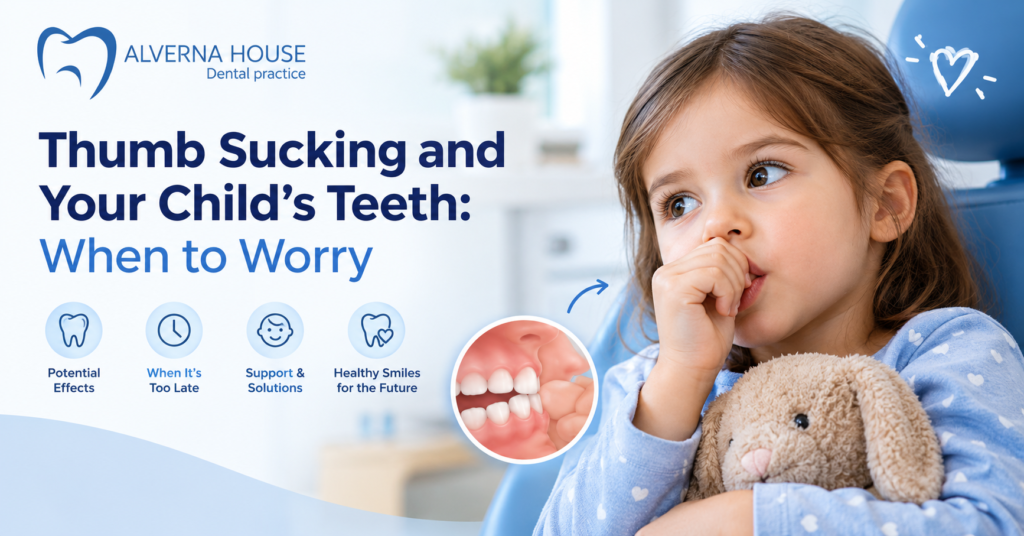
What About Dummies and Thumb Sucking?
Dummies and thumb sucking are common in babies and toddlers.
However, prolonged sucking habits can affect the developing teeth and bite.
For this reason, it is useful to discuss these habits during your child’s dental visit.
Your dentist can look at your child’s mouth and explain whether the habit may affect their teeth. They can also suggest age-appropriate ways to reduce the habit.
Do not feel guilty if your child uses a dummy. Instead, use the dental visit as an opportunity to get helpful advice.
What If My Child Already Has a Tooth Problem?
Do not wait for the next routine check-up if you notice a problem.
Contact a dentist if you notice:
- A hole in a tooth.
- White, brown or dark marks.
- A broken tooth.
- Swelling around the mouth.
- Tooth pain.
- Sensitivity.
- Bleeding or swollen gums.
- Problems eating because of a tooth.
The NHS advises seeing a dentist as soon as possible if you think your child has tooth decay. Early care can help prevent the problem from becoming worse.
Remember, a dental appointment is not only for children with pain. Regular checks help identify problems early.
How Often Should Children Visit the Dentist?
There is no single check-up interval that suits every child.
Your dentist should recommend the next visit based on your child’s oral health and risk of dental problems. NHS guidance explains that check-up intervals can vary depending on individual need.
Some children may need more frequent visits. Others may need less frequent routine checks.
Therefore, follow the schedule your dental team recommends rather than assuming that every child needs an appointment at exactly the same time.
Regular visits can also help your child feel more comfortable as they grow.
Is It Too Late If My Child Is Already a Toddler?
No. If your child has not yet visited a dentist, do not worry.
Simply arrange an appointment.
Even if your child is two, three or older, their first dental visit can still provide useful advice and help build good habits.
However, earlier is better. Starting before the first birthday gives your child more time to become familiar with dental visits and allows the dental team to provide preventive advice from the start.
So, if you have been putting off the first appointment, now is a good time to arrange one.
Child’s First Dentist Visit: A Simple Checklist
Before the appointment, use this quick checklist:
✓ Has your child’s first tooth appeared?
✓ Is your child under one year old?
✓ Have you started brushing their teeth?
✓ Are you using fluoride toothpaste suitable for their age?
✓ Do you know what your child drinks during the day?
✓ Does your child use a dummy or suck their thumb?
✓ Have you noticed any marks, pain, or changes in the teeth?
✓ Have you told the dental team about any worries?
This simple checklist can help you feel prepared.
Frequently Asked Questions
When should a toddler go to the dentist in the UK?
Take your toddler to the dentist when their first milk teeth appear or before their first birthday. This helps them become familiar with dental visits and allows the dentist to give early preventive advice.
Should my baby see a dentist before their first birthday?
Yes. UK NHS guidance recommends taking a child to the dentist when their first milk teeth appear or before they are 12 months old.
What happens at a baby’s first dental appointment?
The dentist may look at your child’s teeth and gums, check their oral health and discuss brushing, fluoride, diet and habits. The visit may be very short if your child is young or nervous.
What if my child cries at the dentist?
Do not worry. Crying is common for young children. Tell the dental team before the appointment so they can help your child feel more comfortable.
Should I wait until my child has pain?
No. You should not wait for pain before arranging a first dental visit. Early dental care focuses on prevention as well as finding problems at an early stage.
How often should my child have a dental check-up?
Your dentist will recommend the right interval based on your child’s dental health and risk. Check-up times can vary from child to child.
Give Your Child a Healthy Start With Alverna House Dental Practice
Your child’s first dental visit is an important step towards good oral health. Alverna House Dental Practice can help you understand how to care for your child’s developing teeth and make dental visits a normal part of their routine.
If your child is ready for their first dental visit, or you have concerns about brushing, teething, tooth decay or dental anxiety, speak with the dental team. Early advice can help you feel more confident and give your child a healthy start.
Final Thoughts
So, when should your child’s first dental visit be?
The answer is simple: when the first milk teeth appear or before your child’s first birthday.
You do not need to wait for pain or a dental problem. An early visit helps your child become familiar with the dental environment. It also gives you practical advice about brushing, fluoride, diet and healthy habits.
Start brushing as soon as the first tooth appears. Keep sugary foods and drinks under control. Make dental visits positive. Most importantly, follow the advice from your child’s dental team.
With simple habits and regular care, you can help your child’s smile stay healthy as they grow.
Also read:https://alvernahouse.co.uk/orthodontics-for-adults/