
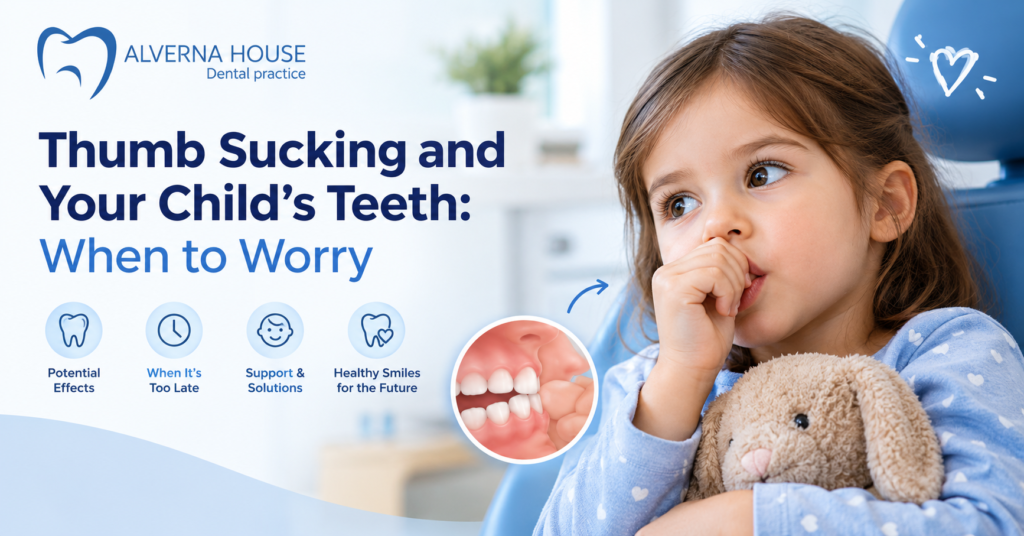
Thumb sucking is a normal self-soothing habit most children outgrow between ages two and four, and it rarely causes dental problems at this stage. Timing and intensity matter more than age alone: forceful, persistent thumb sucking that continues past age four, especially once permanent teeth emerge, is when it is worth a dental check-up.
Thumb sucking is one of the most common habits in young children. Most of the time, it is nothing to worry about at all. This guide explains why children suck their thumbs, when it starts to affect their teeth, and what to watch for as a parent.
What Is Thumb Sucking, and Why Do Children Do It?
Thumb sucking is a natural self-soothing habit many babies develop, sometimes even before birth. Most children stop between ages two and four, without any lasting effect on their teeth. In short, it is completely normal, and timing matters more than the habit itself.
Thumb sucking is a natural comfort habit. Many babies do it from a very young age, sometimes even in the womb. It helps a baby feel secure, and it often helps them settle or fall asleep.
Most children stop on their own between the ages of two and four, as they find other ways to feel calm. This is a completely normal part of early childhood, not a sign of anything wrong.
Why This Matters So Much
Many parents worry the moment they see their child sucking a thumb. In most cases, this worry is simply not needed yet. What matters is not whether a child does it, but how long, how often, and how forcefully.
Here is why this matters so much:
- Most thumb sucking causes no dental problems at all, especially before age three or four
- Persistent, forceful sucking can genuinely affect how teeth and jaws develop
- Timing and intensity matter far more than a single age cut-off
- Early, gentle support usually works better than pressure or punishment
- A dentist can spot early signs long before they become a bigger problem
As a result, thumb sucking is rarely an emergency. It is something worth watching calmly, with a clear sense of what to look for.
Picture a parent who sees their three-year-old sucking a thumb at bedtime and immediately assumes the worst. In most cases, this is simply a comfort habit that will fade naturally within a year or two. Panic rarely helps. Understanding what genuinely matters, and what does not, makes this whole process far less stressful.
Why Timing and Intensity Matter More Than Age Alone
Understanding this helps you know when to relax and when to pay closer attention.
A child who occasionally sucks their thumb when tired is genuinely different from a child who does it forcefully throughout the day. The second pattern is far more likely to affect how teeth and jaws grow, even at a younger age. Gentle, occasional sucking rarely causes lasting problems, even past the toddler years.
Picture two children, both still sucking their thumb at age three. One does it quietly for a few minutes before naps. The other does it constantly, with real pressure, throughout the day. Both children are the same age. Their dental risk is not remotely the same.
Signs Thumb Sucking Is Affecting Your Child’s Teeth
A few clear signs suggest it is genuinely time to pay closer attention:
- Front teeth start to protrude or angle outward
- The upper and lower teeth do not meet properly when your child bites down
- The roof of the mouth looks narrower than usual
- Speech sounds seem affected, especially ones that need the tongue to touch the roof of the mouth
- The habit continues forcefully well past age four
Noticing one of these signs does not mean something is seriously wrong. It simply means a dental check-up is genuinely worth booking, so a professional can look properly rather than you guessing at home.
Age-by-Age Guide: What to Watch For
Under age 2. Thumb sucking is entirely normal here. There is genuinely nothing to worry about at this stage.
Ages 2 to 4. Most children naturally stop during this window. Gentle encouragement is enough for most families.
Age 4 and beyond. This is when timing starts to matter more. If the habit continues forcefully, or baby teeth have started coming in permanently, it is worth a dental conversation.
Age 6 and beyond. Permanent teeth are now emerging. A persistent, forceful habit at this stage genuinely deserves professional attention.
How to Help Your Child Stop
Gentle encouragement consistently works better than criticism or punishment.
A few genuinely helpful approaches:
- Praise your child during moments they usually would suck their thumb, rather than only pointing out lapses
- Use a simple reward chart to celebrate thumb-free stretches
- Notice what triggers the habit, such as tiredness, boredom, or anxiety
- Offer a soft toy or a distraction during those specific trigger moments
- Avoid bitter-tasting substances or scolding, since these rarely help long term
Consistency matters more than any single clever trick. Most children respond well to calm, steady encouragement over time, even if progress feels slow at first.
How a Dentist Can Help
If gentle encouragement alone does not work, a dentist can genuinely help.
Your dentist will check how your child’s teeth and jaw are developing at every routine visit, so early changes rarely go unnoticed. If the habit persists and needs extra support, your dentist may suggest a small oral appliance, sometimes called a tongue crib, which gently discourages the habit without pressure or discomfort. This is usually considered only once other gentle approaches have not worked on their own, and your dentist will always explain exactly how it works before suggesting it.
Key Benefits of Addressing It Early
Paying attention to thumb sucking early brings real, practical benefits. For example:
- Fewer alignment problems later. Early attention often means less orthodontic work down the line.
- A calmer, less stressful process. Gentle, early support avoids battles later on.
- Genuine peace of mind. Knowing what to watch for replaces vague worry with clear understanding.
- Better speech development. Addressing forceful habits early can help avoid speech-related effects.
- A smoother dental check-up routine. Regular visits catch early signs long before they become a bigger concern.
Altogether, these benefits make early, calm attention genuinely worthwhile.
Frequently Asked Questions
At what age should I worry about thumb sucking?
Occasional thumb sucking before age three or four rarely causes concern. Forceful, persistent sucking past age four is when it is worth watching more closely.
Can thumb sucking permanently affect my child’s teeth?
It can, particularly if the habit continues forcefully once permanent teeth start coming in. Stopping earlier gives teeth a better chance to correct naturally.
Is a pacifier better or worse than thumb sucking?
Both can affect teeth if continued too long. A pacifier is often easier to remove, since a thumb is always available to the child.
What is a tongue crib?
A tongue crib is a small oral appliance a dentist may fit to gently discourage thumb sucking, usually after other approaches have not worked.
Should I punish my child for thumb sucking?
No. Gentle encouragement and positive reinforcement consistently work better than criticism or punishment.
When should I book a dental check-up about thumb sucking?
Book one if the habit continues forcefully past age four, or if you notice changes in tooth position, bite, or speech.
Worried About Your Child’s Thumb Sucking Habit?
Most thumb sucking sorts itself out with time and gentle encouragement. Alverna House Dental Practice supports families across St Helens with honest, age-appropriate guidance, whether through the NHS or privately. Every child develops differently, so a proper check-up gives you real answers, rather than guesswork. Left unchecked for years, a forceful habit can quietly shape how teeth and jaws develop, so an early conversation genuinely helps. Get in touch today, and let’s talk through whether your child’s habit is something to watch, or something worth addressing now simply.
Also read: https://alvernahouse.co.uk/nervous-about-the-dentist/