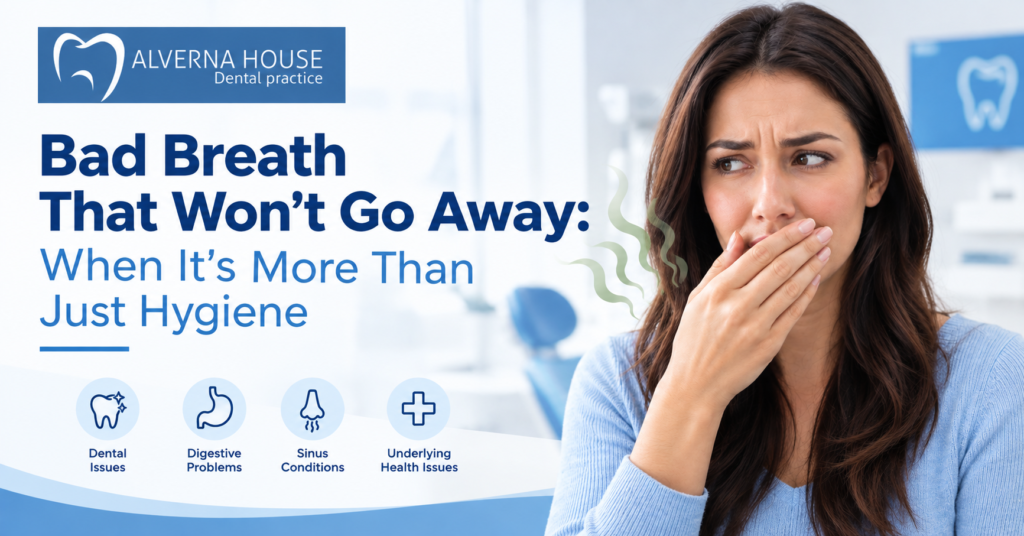
Bad breath that won’t go away usually starts in the mouth, even when you brush well. Common hidden causes include gum disease, bacteria on the back of the tongue, dry mouth, failing fillings and wisdom tooth problems. Less often, the cause lies in the tonsils, sinuses, stomach or a wider health condition, so see a dentist first and then your GP if the dentist finds nothing.
Persistent bad breath can feel embarrassing and hard to talk about. However, it is very common, and it is rarely your fault. Many people brush and floss well but still notice a problem. This guide explains the hidden causes, what really helps and when bad breath points to something more.
What Is Persistent Bad Breath?
Persistent bad breath, also called halitosis, is an unpleasant smell from the mouth that lasts for weeks, not just after a meal. Everyone has morning breath or garlic breath now and then. In contrast, halitosis keeps coming back, even with good daily care.
Where Bad Breath Usually Comes From
In most cases, bad breath starts in the mouth. Research often puts this at around eight or nine cases in ten. Bacteria break down food, dead cells and proteins, and they release smelly sulphur gases. As a result, the breath smells unpleasant, often like rotten eggs.
However, a smaller number of cases start elsewhere, such as the nose, throat, stomach or a wider health condition. So finding the source is the key to fixing it.
Hidden Dental Causes, Even If You Brush Well
Bacteria on the Back of the Tongue
The back of the tongue has a rough surface that traps bacteria. In fact, this is one of the most common sources of bad breath. Many people never clean it.
Gum Disease
Bacteria collect under the gum line, where brushing cannot reach. Early gum disease often causes no pain. Therefore, many people do not realise they have it until a dentist checks.
Dry Mouth
Saliva washes away bacteria. So when your mouth stays dry, bacteria build up quickly. Medicines, mouth breathing, alcohol and smoking can all cause dry mouth.
Problem Teeth and Old Dental Work
- Hidden decay between teeth.
- Old fillings or crowns with small gaps that trap food.
- Food traps between teeth.
- A wisdom tooth partly through the gum, which can become infected.
- A tooth abscess.
- Gum problems around dental implants.
Appliances You Wear
Dentures, retainers, aligners and braces can trap bacteria. So clean them daily, as your dentist advises, and take dentures out at night.
When It’s More Than Just Hygiene
Sometimes the cause lies outside the mouth. For example:
- Tonsil stones: small, smelly lumps that form in the tonsils.
- Sinus problems and postnasal drip: mucus at the back of the throat.
- Throat and chest infections.
- Acid reflux, which can bring a sour taste and smell.
- Low-carbohydrate diets and fasting, which can cause a sweet or fruity smell from ketones.
- Diabetes, especially when blood sugar runs high.
- Kidney or liver problems, which are less common causes.
- Some medicines, often because they dry the mouth.
Also, smoking and vaping make bad breath worse and raise the risk of gum disease.
Foods and Habits That Make It Worse
Daily habits can make bad breath stronger or last longer. For example:
- Garlic, onions and strong spices, which pass into the blood and the lungs.
- Coffee and alcohol, which dry the mouth.
- Skipping meals, which reduces saliva.
- Sugary snacks and drinks, which feed bacteria.
- Breathing through the mouth at night.
Fortunately, small changes help. So drink water with meals, eat crunchy fruit and vegetables, and keep regular mealtimes. Then see whether the smell improves within a week or two.
Red Flags: When to Get Help Quickly
Most bad breath is not serious. However, seek help promptly if you notice:
- A mouth ulcer, red or white patch, or lump that lasts more than three weeks. See your dentist or GP.
- Difficulty swallowing or unexplained weight loss. See your GP.
- Swelling of the face or jaw with fever or pain. Contact your dentist urgently.
- A fruity smell on the breath with thirst, sickness or drowsiness in someone with diabetes. Get urgent medical help.
How to Check Your Own Breath
It is hard to smell your own breath. So try these simple checks:
- Ask someone you trust for an honest answer.
- Gently wipe the back of your tongue with a clean spoon, wait a moment, then smell it.
- Notice whether you often have a bad taste in your mouth.
When You Worry About Bad Breath That Isn’t There
Some people feel sure they have bad breath when others cannot smell anything. This worry can affect confidence and daily life. Fortunately, a dentist can check honestly and reassure you. If the worry continues, your GP can offer support too.
What Actually Helps: A Two-Week Plan
- Brush properly. Brush twice a day for two minutes with fluoride toothpaste. Then spit, but do not rinse.
- Clean between your teeth. Use interdental brushes or floss once a day.
- Clean your tongue. Use a tongue scraper or your toothbrush on the back of the tongue every day.
- Choose the right mouthwash. Use an alcohol-free mouthwash that fights bacteria, such as one with zinc or cetylpyridinium chloride. Use it at a different time from brushing.
- Drink water. Sip water through the day, and chew sugar-free gum to boost saliva.
- Clean your appliances. Clean dentures, retainers or aligners every day.
- Notice patterns. Note whether the smell is worse in the morning, after certain foods or with a blocked nose.
- Book a dental check. If the smell remains after two weeks, see your dentist.
What Your Dentist Will Do
First, your dentist asks about your symptoms, health and medicines. Next, they check your gums, teeth, tongue and any dental work. They may also take X-rays to look for hidden decay or infection. Then they explain the likely cause and agree a plan with you. This may include a hygiene appointment, gum treatment or repairing old fillings. Finally, if your mouth looks healthy, your dentist may suggest you see your GP, who can refer you to an ear, nose and throat specialist if needed.
Why Mouthwash Alone Rarely Works
Many mouthwashes only cover the smell for a short time. In addition, strong alcohol-based rinses can dry the mouth and make things worse. So use mouthwash as an extra step, not a replacement for cleaning and dental care.
Key Points to Remember
- Most bad breath starts in the mouth.
- The back of the tongue is a common hidden source.
- Gum disease often causes no pain at first.
- Tonsils, sinuses and stomach can also play a part.
- A lasting ulcer or lump needs prompt checking.
- See your dentist first, then your GP if needed.
Frequently Asked Questions
Why do I have bad breath even though I brush my teeth?
Bacteria may live on the back of your tongue, under your gums or around old fillings. A dentist can find the exact cause.
Can bad breath come from the stomach?
Sometimes. Acid reflux can cause a sour smell, but most bad breath still starts in the mouth.
What are tonsil stones?
They are small, smelly lumps that form in the tonsils. Your GP can advise if they keep coming back.
Does mouthwash cure bad breath?
No. It may help a little, but it does not fix the cause on its own.
Can diabetes cause bad breath?
Yes. It raises the risk of gum disease, and very high blood sugar can cause a fruity smell that needs urgent help.
Should I see a dentist or a GP about bad breath?
See your dentist first, because most causes start in the mouth. Then see your GP if your dentist finds no cause.
Can a dentist tell if I have bad breath?
Yes. Your dentist can check honestly and help find the cause.
Final Thoughts
Bad breath that won’t go away is common, treatable and nothing to feel ashamed of. Often, the cause hides on the tongue, under the gums or around old dental work. Sometimes, however, it points to the tonsils, sinuses or a wider health issue. So follow a simple routine, watch for red flags and book a dental check. Then you can find the cause and feel confident again.
Get Help With Bad Breath at Alverna House Dental Practice
If bad breath keeps coming back, our friendly team at Alverna House Dental Practice in St Helens can help. We check your teeth, gums and tongue carefully, explain what we find in plain words and agree a clear plan with you. We never judge, and we always treat you with care. Book your appointment with Alverna House Dental Practice today.
Also read : https://alvernahouse.co.uk/dry-mouth/