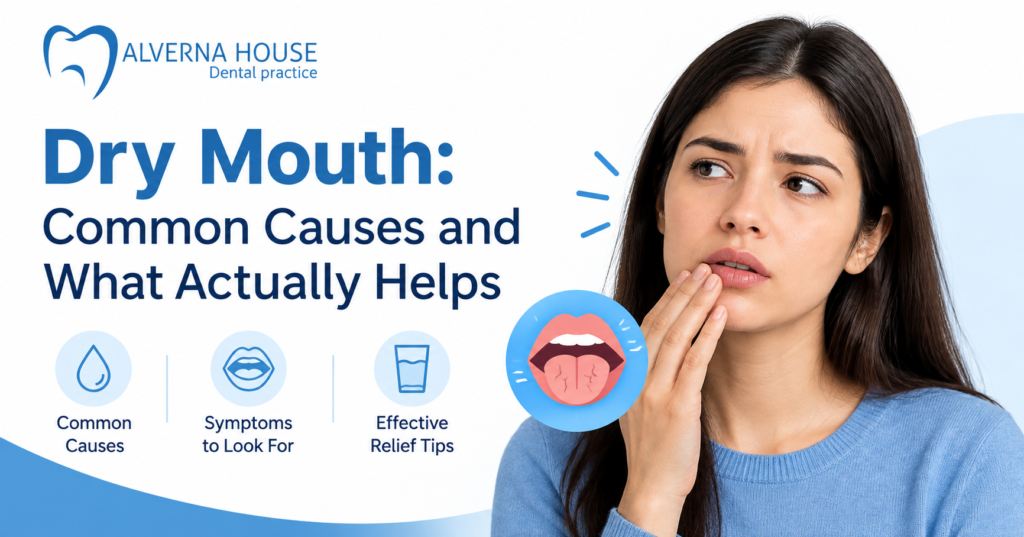
Dry mouth happens when your mouth makes too little saliva. The most common causes are medicines, ageing, mouth breathing, dehydration and some health conditions such as diabetes and Sjögren’s syndrome. What helps most is sipping water, chewing sugar-free gum, using saliva substitutes, protecting your teeth with high-fluoride toothpaste and asking your GP to review your medicines.
A dry mouth can feel sticky, uncomfortable and hard to ignore. However, it is more than an annoyance. Saliva protects your teeth and gums, so a dry mouth raises your risk of decay. This guide explains the common causes. It also shows which remedies really help and when to get advice.
What Is Dry Mouth?
Dry mouth, also called xerostomia, is a feeling of dryness caused by too little saliva. Everyone gets a dry mouth now and then, for example when thirsty or nervous. However, a dry mouth that lasts for weeks usually has a cause that needs attention.
Why Saliva Matters
Saliva does far more than keep your mouth wet. For example, it:
- Washes away food and sugar.
- Neutralises acids that attack your teeth.
- Helps repair early damage to tooth enamel.
- Fights germs that cause infections.
- Helps you taste, chew, swallow and speak.
So when saliva drops, problems can follow quickly. In particular, tooth decay, gum disease, mouth sores and oral thrush all become more likely.
Signs of Dry Mouth
- A sticky or dry feeling in the mouth.
- Thick or stringy saliva.
- Bad breath.
- A dry, rough or cracked tongue.
- Trouble chewing, swallowing or speaking.
- A sore throat or hoarse voice.
- Changes in taste.
- Dentures that rub or will not stay in place.
Common Causes of Dry Mouth
Medicines
Medicines cause more dry mouth than anything else. Hundreds of medicines can reduce saliva, including some for depression, anxiety, high blood pressure, allergies, bladder problems and pain. Moreover, the risk rises when you take several medicines together.
Ageing
Dry mouth becomes more common with age. Often, this happens because older adults take more medicines, rather than because of age alone.
Mouth Breathing and Snoring
Breathing through your mouth dries it out, especially at night. A blocked nose, snoring, sleep apnoea machines (CPAP) and some retainers can all play a part.
Dehydration, Stress and Lifestyle
Not drinking enough fluid can dry your mouth. Similarly, stress and anxiety can reduce saliva for a while. Alcohol, smoking, vaping and lots of caffeine can make dryness worse.
Health Conditions
- Diabetes, especially when blood sugar runs high.
- Sjögren’s syndrome, which often causes dry eyes too.
- Menopause, because hormone changes can affect saliva.
- Stroke, Parkinson’s disease and Alzheimer’s disease.
- Salivary gland problems, such as stones or infection.
Cancer Treatment
Radiotherapy to the head and neck can damage the salivary glands. As a result, dry mouth can last a long time. Chemotherapy can also change saliva, though this often improves after treatment ends.
Why Is My Mouth Dry Even When I Drink Lots of Water?
Drinking water helps your body, but it does not always fix a dry mouth. The problem often lies in how much saliva your glands make, not how much you drink. So if your mouth stays dry despite plenty of fluids, ask your dentist or GP about the cause.
What Actually Helps Dry Mouth
Some remedies work much better than others. Here are the options that help most:
- Sip water often through the day, and keep a glass by your bed.
- Chew sugar-free gum, ideally with xylitol, to boost saliva.
- Use saliva substitute gels, sprays or lozenges from a pharmacy.
- Brush with fluoride toothpaste, or a high-fluoride toothpaste if your dentist prescribes it.
- Use an alcohol-free mouthwash.
- Run a humidifier in your bedroom at night.
- Ask your GP to review your medicines, but never stop a medicine on your own.
- Treat a blocked nose so you can breathe through it more easily.
In addition, some people need prescription treatment. For example, doctors sometimes prescribe pilocarpine tablets for dry mouth after head and neck radiotherapy or for Sjögren’s syndrome. Your GP or a specialist can advise whether this suits you.
A Simple Night-Time Routine
Dry mouth often feels worst at night and first thing in the morning. So try this routine before bed. First, brush with fluoride toothpaste and spit without rinsing. Next, apply a saliva substitute gel to your gums and tongue. Then place a glass of water by your bed. Also, run a humidifier if your room feels dry. Finally, if you snore or breathe through your mouth, ask your GP about the cause.
Dry Mouth and Dentures
Saliva helps dentures grip and feel comfortable. Therefore, a dry mouth can make dentures rub or slip. Keep your dentures clean, take them out at night and use a saliva gel under them if needed. In addition, ask your dentist to check the fit if sore spots appear.
What Does Not Help (or Makes It Worse)
- Sucking sugary sweets, which feeds decay.
- Sour or acidic sweets, which can wear away enamel.
- Alcohol-based mouthwash, which can dry the mouth further.
- Lots of tea, coffee or energy drinks.
- Sipping fizzy or sugary drinks all day.
- Smoking and vaping.
Managing Dry Mouth: Step by Step
- Notice your symptoms. Write down when your mouth feels dry and how long it lasts.
- List your medicines. Include tablets, inhalers and anything you buy without a prescription.
- Build a daily routine. Sip water often, chew sugar-free gum and avoid sugary snacks between meals.
- Protect your teeth. Brush twice a day with fluoride toothpaste. Then spit, but do not rinse.
- Try a saliva substitute. Ask a pharmacist which gel, spray or lozenge suits you best.
- Look after your nights. Use a humidifier and keep water nearby. Also, apply a saliva gel before bed if needed.
- See your dentist. Book a check-up so your dentist can look for early decay and suggest extra protection.
- Talk to your GP. Ask about your medicines and any health conditions that might cause dryness.
When to See Your GP or Dentist
See your dentist if your mouth stays dry for more than a few weeks. However, contact your GP if you also notice:
- Dry eyes as well as a dry mouth.
- Extreme thirst and passing a lot of urine.
- Swelling of the salivary glands in your cheeks or under your jaw.
- Unexplained weight loss.
- Dryness that started after a new medicine.
These signs can point to conditions such as diabetes or Sjögren’s syndrome, which need proper testing.
How Your Dentist Can Help
First, your dentist checks your mouth for signs of dryness, decay and infection. Next, they may suggest more frequent check-ups. They can also prescribe a high-fluoride toothpaste or apply fluoride varnish to protect your teeth. Finally, they can adjust dentures that rub because of dryness.
Key Points to Remember
- Medicines cause most cases of dry mouth.
- Saliva protects teeth, so dryness raises decay risk.
- Sipping water and sugar-free gum help most people.
- Saliva substitutes and high-fluoride toothpaste add protection.
- Never stop a medicine without speaking to your GP.
- Dry eyes or extreme thirst need a GP check.
Frequently Asked Questions
What is the most common cause of dry mouth?
Medicines cause most cases of dry mouth. Other common causes include mouth breathing, dehydration, ageing and diabetes.
What is the fastest way to relieve dry mouth?
Sip water, chew sugar-free gum or use a saliva substitute spray. These help quickly but do not treat the cause.
Why is my mouth dry at night?
Breathing through your mouth while you sleep often causes it. A humidifier and a bedside saliva gel can help.
Can dry mouth damage my teeth?
Yes. Less saliva means less protection, so decay and gum disease become more likely.
Is dry mouth a sign of diabetes?
It can be, especially with extreme thirst and frequent urination. So see your GP for a check.
Can menopause cause dry mouth?
Yes. Hormone changes during menopause can reduce saliva for some women.
Which mouthwash is best for dry mouth?
Choose an alcohol-free mouthwash. Alcohol-based products can dry your mouth even more.
Final Thoughts
Dry mouth is common, but you do not have to put up with it. Simple steps such as sipping water, chewing sugar-free gum and using saliva substitutes often bring relief. Meanwhile, good fluoride care protects your teeth from decay. So if dryness lasts, speak to your dentist and GP. Together, they can find the cause and help you feel comfortable again.
Get Help With Dry Mouth at Alverna House Dental Practice
If a dry mouth is affecting your comfort or your teeth, our team at Alverna House Dental Practice in St Helens can help. We check your mouth for signs of dryness and decay, explain what we find in plain words and suggest practical ways to protect your teeth. Book your appointment with Alverna House Dental Practice today.