
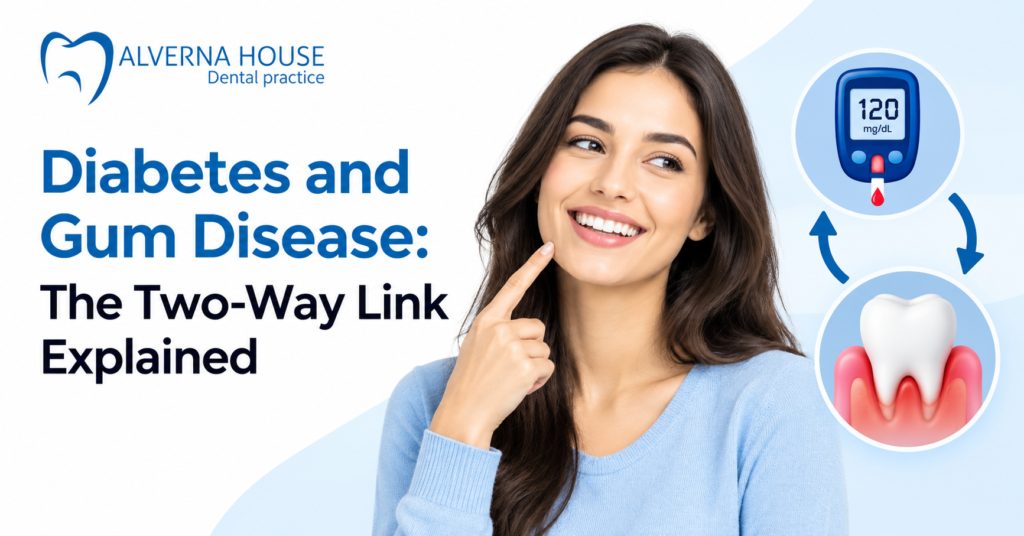
Diabetes and gum disease affect each other in both directions. High blood sugar makes gum disease more likely and more severe, while gum disease can make blood sugar harder to control. The good news is that treating gum disease and keeping blood sugar steady can help both conditions.
Many people with diabetes do not realise how much it affects their gums. Likewise, few people know that gum disease can affect blood sugar. This guide explains the two-way link in plain words. It also shows the warning signs and the simple steps that protect your mouth and your health.
What Is the Link Between Diabetes and Gum Disease?
Diabetes means your body struggles to control blood sugar. Gum disease is an infection and inflammation of the gums and the bone that holds your teeth. The two conditions feed each other, so experts call it a two-way link.
Understanding Gum Disease
Gum disease has two main stages:
- Gingivitis: the early stage. Gums look red, puffy or bleed when you brush. Good cleaning can reverse it.
- Periodontitis: the advanced stage. The infection damages the bone around your teeth. Teeth can loosen and, in time, fall out.
Often, gum disease causes no pain until it becomes serious. So regular dental checks matter, even when your mouth feels fine.
How Diabetes Raises Your Risk of Gum Disease
Research suggests that people with diabetes are around two to three times more likely to develop periodontitis. Moreover, the risk rises when blood sugar stays high. Here is why:
- More sugar in saliva: high blood sugar raises sugar levels in your mouth, which feeds harmful bacteria.
- Weaker defences: high blood sugar makes it harder for your body to fight infection.
- Extra inflammation: diabetes can make your gums overreact to plaque, which causes more damage.
- Slower healing: diabetes affects small blood vessels, so gums repair themselves more slowly.
- Dry mouth: diabetes and some medicines reduce saliva, which normally washes bacteria away.
How Gum Disease Makes Blood Sugar Harder to Control
The link also works the other way. Gum disease is a long-lasting infection. As a result, it releases inflammatory chemicals into your bloodstream. These chemicals make your body respond less well to insulin. Therefore, blood sugar can run higher than usual.
Fortunately, treatment helps. Research reviews show that treating gum disease can lower HbA1c by a small but useful amount, around 4 mmol/mol, within a few months. HbA1c measures your average blood sugar over about three months. However, gum treatment does not replace diabetes medicine. Instead, it works alongside your usual care.
Warning Signs to Watch For
If you have diabetes, take these signs seriously:
- Gums that bleed when you brush or floss.
- Red, swollen or tender gums.
- Bad breath or a bad taste that does not go away.
- Gums that pull back, so teeth look longer.
- Loose teeth or teeth that move.
- A dry mouth, burning feeling or white patches, which can signal thrush.
- Slow healing after dental treatment.
Also, if you notice any of these signs and do not have diabetes, mention it to your dentist. Sometimes, severe or unusual gum disease is an early clue that blood sugar needs checking. In that case, your dentist may suggest that you see your GP.
Other Mouth Problems Linked to Diabetes
Gum disease is the main concern. However, diabetes can affect your mouth in other ways too:
- Dry mouth, which raises the risk of tooth decay.
- Oral thrush, a fungal infection that causes white or red patches.
- A burning feeling in the mouth or tongue.
- Changes in taste.
- Slower healing after extractions or other treatment.
So mention any of these changes at your next check-up. In many cases, simple steps such as sipping water, using sugar-free gum or changing your toothpaste can help. Your dentist can also check whether a medicine might be the cause.
Which Types of Diabetes Does This Affect?
The link applies to type 1 and type 2 diabetes. In addition, people with prediabetes, also called non-diabetic hyperglycaemia, should take extra care. Pregnancy can also raise gum problems, especially with gestational diabetes. So tell your dentist if you are pregnant.
Smoking and Diabetes: A Double Risk
Smoking damages gums on its own. Combined with diabetes, it raises the risk of gum disease even further. It also hides bleeding, so you may miss early signs. Therefore, stopping smoking is one of the best things you can do for your gums. Your GP, pharmacist or local NHS stop smoking service can help.
Protecting Your Gums With Diabetes: Step by Step
- Tell your dental team. Let them know you have diabetes, your type and the medicines you take.
- Share your HbA1c. Bring your latest result. This helps your dentist plan safe treatment.
- Book regular checks. Your dentist will set a recall interval based on your risk. Many people with diabetes need checks every three to six months.
- Brush twice a day. Use a fluoride toothpaste for two minutes. Then spit, but do not rinse.
- Clean between your teeth daily. Use interdental brushes or floss. This removes plaque your toothbrush misses.
- Keep blood sugar steady. Follow the plan from your GP or diabetes nurse. Steady blood sugar helps your gums heal.
- Act on early signs. Book an appointment if your gums bleed or feel sore. Early treatment works best.
- Keep both teams informed. Tell your GP or diabetes nurse about gum problems. Likewise, tell your dentist about any change in your diabetes care.
Staying Safe at Your Dental Appointment
Some diabetes medicines, such as insulin, can cause low blood sugar, known as a hypo. So plan ahead:
- Eat and take your medicine as usual before your visit, unless your doctor says otherwise.
- Bring glucose tablets or a sugary drink.
- Choose a morning appointment if that suits your routine.
- Tell the team straight away if you feel shaky, sweaty or confused.
Also, after treatment with numbing, take care with eating until the numbness wears off. Then return to your normal meals as soon as you can.
How Dentists Treat Gum Disease in People With Diabetes
First, your dentist checks your gums with a basic periodontal examination, or BPE. Next, they measure the gaps between your gums and teeth. Then they plan treatment based on the results.
- Professional cleaning above and below the gum line.
- Help with your home cleaning routine.
- More frequent check-ups and hygiene visits.
- Referral to a gum specialist for advanced cases.
Key Points to Remember
- Diabetes raises the risk of gum disease.
- Gum disease can make blood sugar harder to control.
- Treating gum disease can help lower HbA1c a little.
- Early gum disease is often painless.
- Smoking makes the risk much worse.
- Your dentist and diabetes team work best together.
Frequently Asked Questions
Can diabetes cause gum disease?
Diabetes does not cause gum disease on its own. However, it makes gum disease more likely, more severe and slower to heal.
Can gum disease raise blood sugar?
Yes. Gum infection causes inflammation that makes insulin work less well, so blood sugar can rise.
Will treating my gums improve my diabetes?
It can help. Research shows a small drop in HbA1c after gum treatment, alongside your usual diabetes care.
How often should I see a dentist if I have diabetes?
Your dentist will advise based on your gum health. Many people with diabetes need checks every three to six months.
Do people with diabetes get free NHS dental care?
In England, diabetes alone does not exempt you from NHS dental charges. However, you may qualify through other routes, such as certain benefits or pregnancy.
Can I have dental implants if I have diabetes?
Often, yes, if your blood sugar is well controlled. Your dentist will check your health and gums first.
Is gum disease reversible?
Early gum disease, called gingivitis, is reversible. Advanced gum disease cannot be fully reversed, but treatment can stop it getting worse.
Final Thoughts
Diabetes and gum disease share a two-way link, but you can break the cycle. Steady blood sugar protects your gums. Meanwhile, healthy gums can help your blood sugar. So keep up good daily cleaning, attend regular checks and tell your dental team about your diabetes. Together, these steps protect your smile and your wider health.
Book a Gum Health Check at Alverna House Dental Practice
If you live with diabetes, our team at Alverna House Dental Practice in St Helens can help you protect your gums. We check your gum health carefully, explain what we find in plain words and agree a care plan that suits you. Then we work alongside your wider diabetes care to keep your mouth healthy. Book your gum health check with Alverna House Dental Practice today.
Also read : https://alvernahouse.co.uk/fear-of-needles-dentist/