
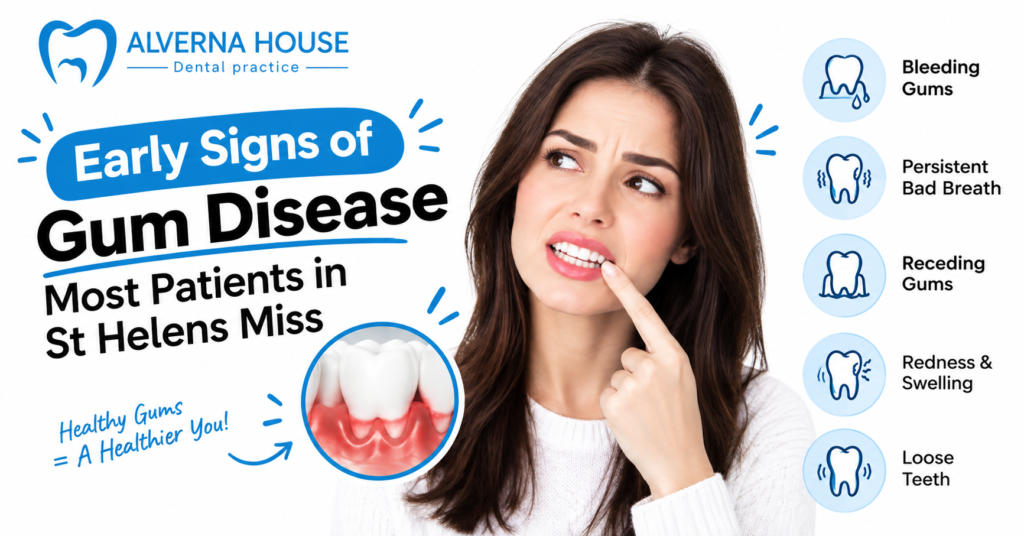
Early gum disease is usually painless, which is why so many patients in St Helens miss the warning signs: bleeding gums, red or swollen gums, persistent bad breath, tenderness, sensitivity to hot or cold, and gums that look slightly pulled back. Caught early, at the gingivitis stage, gum disease is fully reversible with proper cleaning and a professional check-up.
Introduction
Gum disease often causes no pain at all in its early stages. Because of this, many people in St Helens miss the warning signs completely. This guide explains what to look for, why these signs get missed, and what to do next. Catching gum disease early makes a real difference.
What Is Gum Disease?
Gum disease starts when plaque, a sticky film of bacteria, builds up along the gumline. If it is not removed, it irritates the gums and causes inflammation. Dentists call this early stage gingivitis, and it is completely reversible.
Left alone, plaque hardens into tartar, which a toothbrush cannot remove. At that point, the condition can progress into periodontitis, a more advanced and permanent stage of gum disease.
Why This Matters So Much for Patients
Gum disease is one of the most common health conditions in the UK. According to the Oral Health Foundation, around a third of adults have experienced bleeding gums in the past year, and gum disease affects a very large share of the adult population overall. So, if you have noticed something, you are certainly not alone.
Here is why so many patients miss the early signs:
- Gum disease is usually painless in its early stages
- Symptoms often build up slowly, so they feel normal over time
- Many people assume bleeding gums are simply normal
- Signs like bad breath get blamed on food or coffee instead
- Nobody checks their own gums the way a dentist does
As a result, early gum disease often goes unnoticed for months, sometimes years. Skip a proper check, and a fully reversible problem can quietly become a permanent one.
Picture a patient who notices a little blood when they brush. It happens now and then, so they simply switch to a softer brush and carry on. Months later, at a routine check-up, the dentist finds early pockets forming between the gum and a back tooth. The bleeding was never “nothing.” It was the very first sign, quietly missed for months.
Why Early Signs of Gum Disease Get Missed
Early gum disease rarely hurts. This is the main reason so many patients in St Helens miss it completely. Pain usually arrives much later, once the condition has already progressed.
Because of this, early signs often get explained away instead of checked out. A little blood in the sink gets blamed on brushing too hard. Bad breath gets blamed on coffee or a missed meal. Tender gums get ignored because they settle down again after a day or two.
Meanwhile, nobody examines their own gums closely enough to notice slow, gradual change. A dentist measures gum health properly, using a small probe to check for early pockets forming between the gum and tooth. That level of detail is simply not visible in the mirror.
There is also a simple habit gap at play. Most people check their teeth in the mirror, not their gums. A quick glance takes in the smile, the colour of the teeth, maybe a stray bit of food. Gum colour, texture, and firmness rarely get a second look, even though they usually change first.
Early Signs of Gum Disease Most Patients in St Helens Miss
These are the signs worth paying attention to, even when they seem minor.
Bleeding gums. Gums that bleed when you brush or floss are not normal, even if it only happens occasionally. This is usually the very first sign of gum inflammation.
Red or swollen gums. Healthy gums are firm and pale pink. Gums that look red, puffy, or slightly rounded near the teeth are showing early inflammation.
Persistent bad breath. Bacteria along the gumline produce odour that brushing alone often cannot fully fix. If bad breath keeps returning, it is worth checking further.
Tenderness when eating. Mild soreness while chewing or brushing can be easy to dismiss, especially if it comes and goes.
Sensitivity to hot or cold. As gums begin to recede, they can expose sensitive areas of the tooth. This sensitivity is often mistaken for a simple filling issue, rather than an early gum problem.
Gums that look slightly pulled back. A tooth that suddenly looks a little longer than before can be an early sign of gum recession.
Notice how gentle most of these signs are. None of them are dramatic. That gentleness is exactly why they get missed so often.
Common Myths That Delay Treatment
A few common myths stop patients from getting checked sooner. It is worth clearing these up directly.
“Bleeding gums mean I am brushing too hard.” This is rarely true. Healthy gums do not bleed from normal brushing. Bleeding almost always points to inflammation, not brushing technique.
“It will go away on its own.” Early gum disease does not resolve by itself while plaque remains along the gumline. It needs proper cleaning, both at home and professionally.
“It cannot be serious if it does not hurt.” Pain is actually one of the last symptoms to appear, not one of the first. Painless does not mean harmless.
“I would know if something was wrong.” Gradual change is hard to notice in your own mouth, day to day. A dentist compares your gums against a clear clinical standard, not memory alone.
Step-by-Step: What to Do If You Notice These Signs
Follow these steps if any of the signs above sound familiar.
Step 1: Look closely at your gums in good light. Check for redness, swelling, or a change in colour compared to how they used to look.
Step 2: Notice bleeding properly. Pay attention to whether brushing or flossing causes blood, even occasionally.
Step 3: Book a dental check-up. A professional examination can measure gum health accurately, which home checks simply cannot do.
Step 4: Mention every symptom, even small ones. Small details help build a clearer picture of what is actually happening.
Step 5: Follow through with any advice given. Early gum disease responds well to consistent home care and professional cleaning.
Over time, this simple process catches problems while they are still easy to reverse.
Key Benefits of Catching Gum Disease Early
Spotting these signs early brings real, lasting benefits. For example:
- Full reversal. Early gum disease is fully reversible with the right care, before any lasting damage sets in.
- Simpler treatment. Treatment at this stage is usually simpler and more comfortable than treatment later on.
- Protected teeth. You avoid the risk of permanent bone or tissue damage further down the line.
- Fresher, healthier gums. Healthy gums support better breath and everyday confidence.
- Less time and cost overall. Catching problems early often means less time in the chair, and less cost, than treating advanced disease.
Altogether, these benefits make a genuinely strong case for not waiting until something hurts.
Frequently Asked Questions
What is the earliest sign of gum disease?
Bleeding gums during brushing or flossing is usually the earliest sign. Even occasional bleeding is worth paying attention to.
Can gum disease really have no symptoms at all?
Yes. Early gum disease is often painless, which is exactly why so many people in St Helens miss it until it has progressed further.
Does bleeding gums always mean gum disease?
Not always, but it is the most common cause. It is worth having checked rather than assuming it is nothing.
Can early gum disease be reversed?
Yes. At the gingivitis stage, before any bone loss occurs, gum disease is fully reversible with proper cleaning and care.
How often should I have my gums checked?
A routine dental check-up, usually every six months, allows early signs to be caught well before they become noticeable at home.
Is tooth sensitivity a sign of gum disease?
It can be. As gums recede, they can expose sensitive areas of the tooth, which is often mistaken for a different dental issue entirely.
Worried About Your Gums? Book a Check-Up Today
Early gum disease is easy to miss and easy to treat, but only if it gets checked in time. Alverna House Dental Practice offers thorough gum health checks for patients across St Helens, whether through the NHS or privately. Left unchecked, a simple, reversible problem can quietly become a lasting one. Get in touch today, and let’s make sure your gums stay healthy for the long term.